Let’s get started talking about the art and craft of Lighting Design. The obvious first questions you might ask … “What’s my job?”, “What’s expected of me?”, or “What constitutes success?”
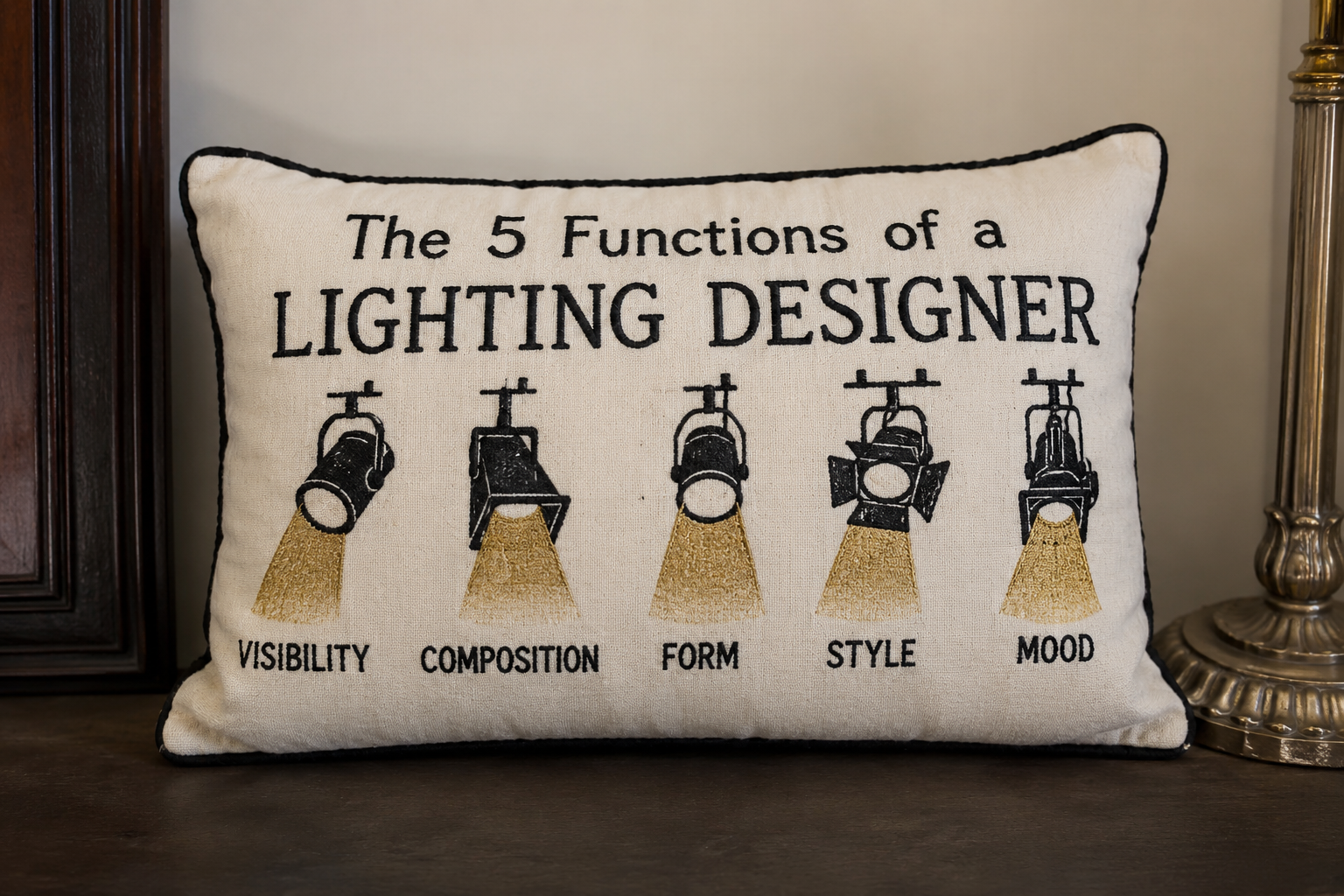
I would answer these questions with the five primary functions or the five primary tasks of a lighting designer – Visibility, Composition, Form, Style, and Mood. These five functions are tied together by you, the lighting designer, artfully coalescing and balancing these tasks to achieve your primary job as a theatre artist – to help tell a story using your unique role and your specific talents.
Let’s break down each function and identify how they can help tell a story.
1) Selective Visibility
If you were to choose just one goal, this is it; can the audience see what needs to be seen? I’d really like to stress that fact here – while if you have the opportunity to light your actors artfully, you should! However, if you work at a theatre has a very thin lighting rig, a lit actor is better than an actor lost in the shadows. And that counts as success.
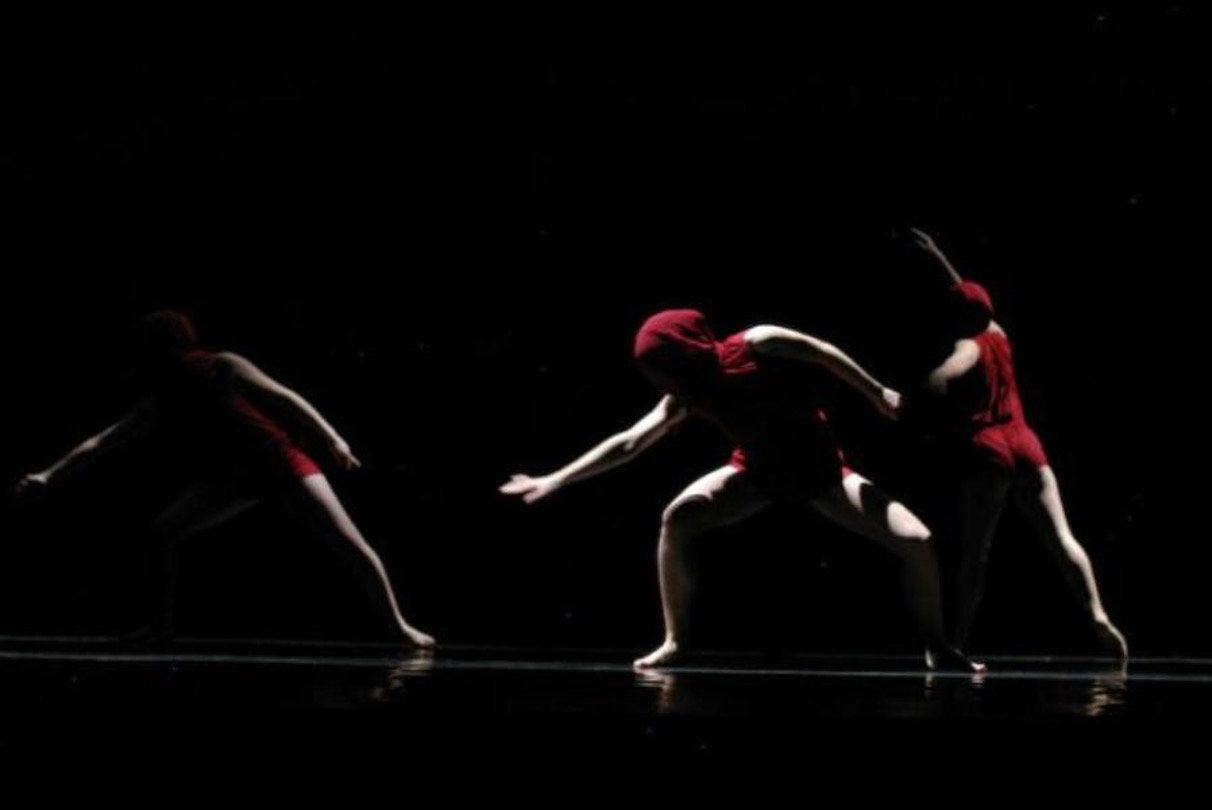
Alright. Let’s unpack this further. I like to call this function “Selective Visibility”. Your goal is to light what needs to be seen and leave what needs to be hidden in the shadows. Below you’ll see a photo from a dance concert I once designed – the dancers would move in and out of the beams of light allowing them to grab and release attention.
Further, the amount of brightness matters to visibility. Dim light that causes the audience to strain their eyes does their experience a disservice.
Finally, the type of light matters to visibility. Obviously, the absence of light doesn’t serve the stage well in most situations, but thinking further, work lights on stage doesn’t feel very theatrical, or if you’re doing outdoor theatre … while the Sun will do the job just fine, adding some stage lighting will help us know that the stage I where we ought to be focusing our attention!
2) Composition
This is the most create of the function and where we get the idea of “painting the stage with light.” The stage with its costumed actors and intricate scenic designs are a blank, black canvas without your work. It’s your job, privilege, and joy to carefully and careful cast light and lift the actors from the darkest and pull the physical world from the background. You get to compose a stage picture like a painter slowly brings to life a painting or a musician carefully places notes on a staff. Similar to both a painter and a musician, this is something done through both skillful technique and artistic instinct and vision.
As always, we want to tell the story through our own unique voice; and because lighting is one of the elements of theatre that can easily change over time, lighting can help define some of the given circumstances, the what, when, and where – examples being time of day, location, etc. The work of composition might then begin by considering, for example, that the actors are currently outdoors at night – therefor a deep blue base layer with motivated sources such as the moon or a porch light by define your work.
Next, you can help direct the audience’s focus, expanding their eye to a full stage or drawing it down to an intimate monologue. From an audience point of view, this should be natural, effortless. This would be akin to a film in which we get to decide what is seen and what is unseen by use of cameras and the size of the frame; but instead of using the camera, we can use light and composition to pull the actors in and push them away – telling them where to look and what to ignore.
Finally, it’s your job to separate the foreground from the background, lift the action from the world in which it lives. It would be easy to light the actors, be satisfied, but completely forget to light the scenery behind and around them. I like to say that no corner of the scenic design should be ignored; a piece of the stage might be in black but that darkness should be a purposeful choice. Similarly, it would be easy to light the stage boldly and beautifully, be satisfied, but completely forget that the actors are the ones speaking the lines. I often need to remind myself that the beauty of the stage picture cannot overwhelm the work of the actor artists. There needs to be an ebb and a flow, a give and take, a purposeful balance between the two; and that, is composition.
3) Revelation of Form
This might surprise you, but we live in a three-dimensional world. Although … I really did enjoy the Three Body Problem trilogy by Liu Cixin, then we’re having a whole different conversation about dimensional experiences … but that’s something for a podcast entitled Tangents. Anyway, our eyes experience the world in 3D so it’s important to light the stage to express our lived experience, we call this the revelation of form.
Perhaps here the best way to explain this is by identifying when it’s done poorly. Have you ever been with some friends, at night, and you take a photo with flash? It’s just one light source coming form the same direction as the camera – and what happens – is that the people in the photo look very flat. The same thing happens when our primary lights (or perhaps our only lights) are front lights, coming from behind the audience; causing our actors and stage to look for flat.
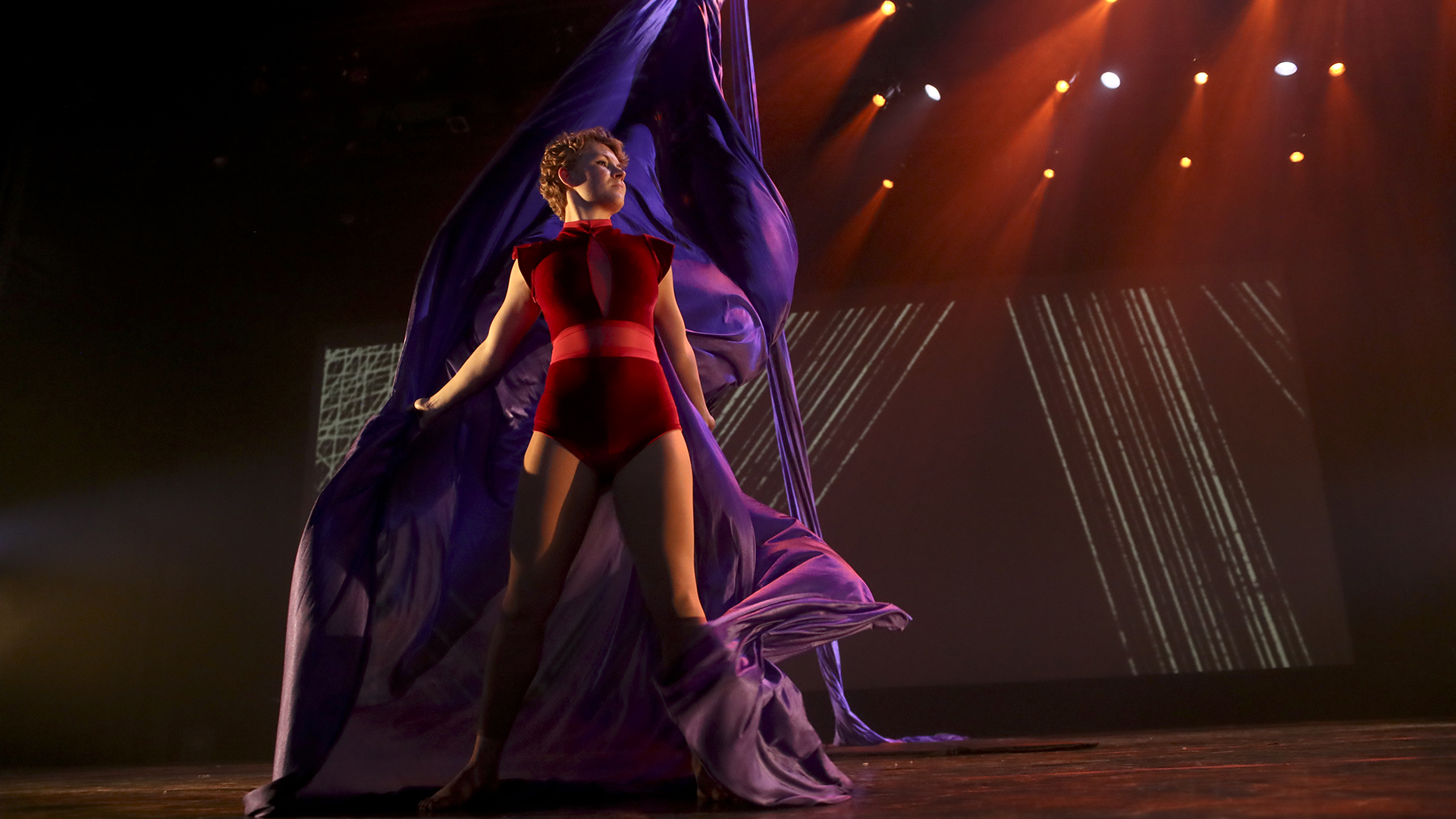
The secret here is contrast – that lights come form various angels, are at different intensities, and perhaps have different colors. This variation creates contrast and contrast reveals form. Dance lighting might be one of the best types of lighting to showcase this. What? You ask why? Well, the primary method of communication in dance is the line of the body; therefore, we have to reveal form in a bold way in order to help support the telling of the story. In the photo below, a dance designed by one of my students (his name is Tim, you’d probably like him) we can see that shadow speaks just as loudly as light, that the play between light and dark highlight the body and the fabric.
4) Establish Mood
This is a tricky one and I’m going to quote a famous theatre adage, “Mood spelled backwards is DOOM!”. It’s fair. It’s really fair. Mmm. Let’s back it up a second. Lighting is unique in the sense that along with the actors, it gets to breath in the space (as does Sound and Projections). It’s a pliable, kinetic art form. This means that we can support, enhance, magnify the mood found in the text and evoked by the actors. Sometimes we even get to make it happen subconsciously – they didn’t even realize it was happening! But I cannot stress this enough – the moment we light for lighting’s sake, our art has become self indulgent. The moment we craft a look for the sake of the beauty, rather than the way the beauty supports the story, we’ve lost our way. The moment we create mood because it satisfied our cravings as a designer, we’re no longer doing our jobs. This is why mood can so easily slip into doom.
So when the moment is right, and we know the audience wants it and the story supports it, we can be bold and beautiful and evocative and moody. And in this moment, and every other moment, it’s important that we support and establish an appropriate mood on stage.
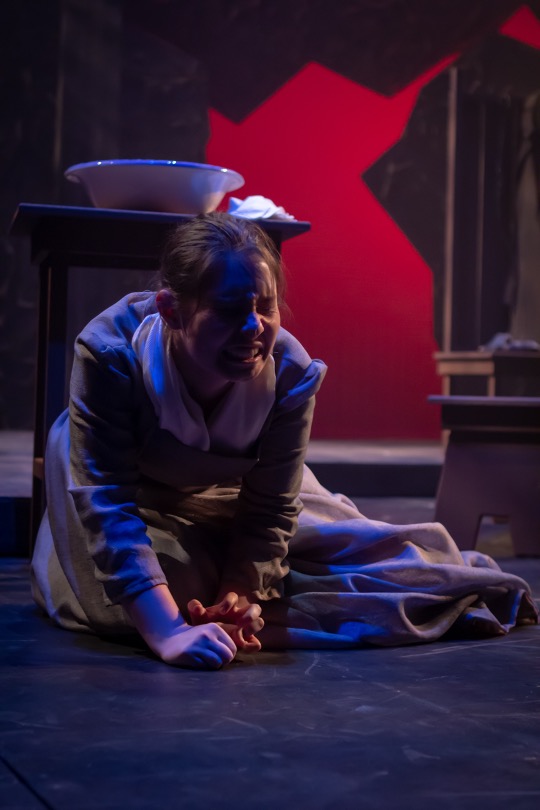
Oh yeah, here’s a photo of one of my favorite moody moments from my design for The Crucible.
5) Reinforce Style / Theme
Alongside your co-artists, you will need to design on the style of your performance (realism, theatrical, musical theatre, minimalism, etc). This will drive, guide, and ground many of your choices. Choices that conflict with one another – either in the same design or between designs – will likely be jarring for the audience and take them out of the moment. There’s certainly a time and a place for that exact response, but for the most part we want the audience to feel engrossed, brought in, a part of the world.
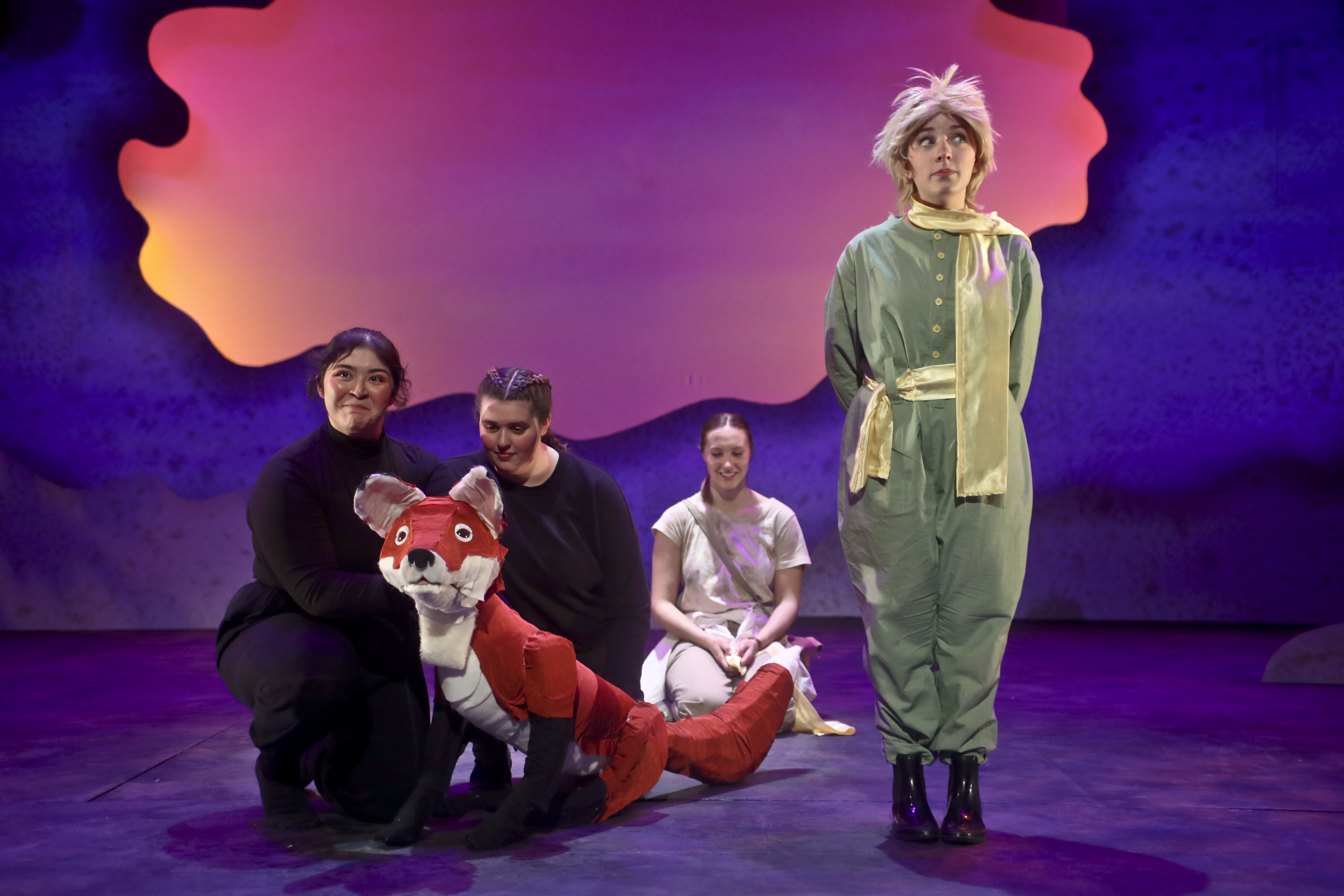
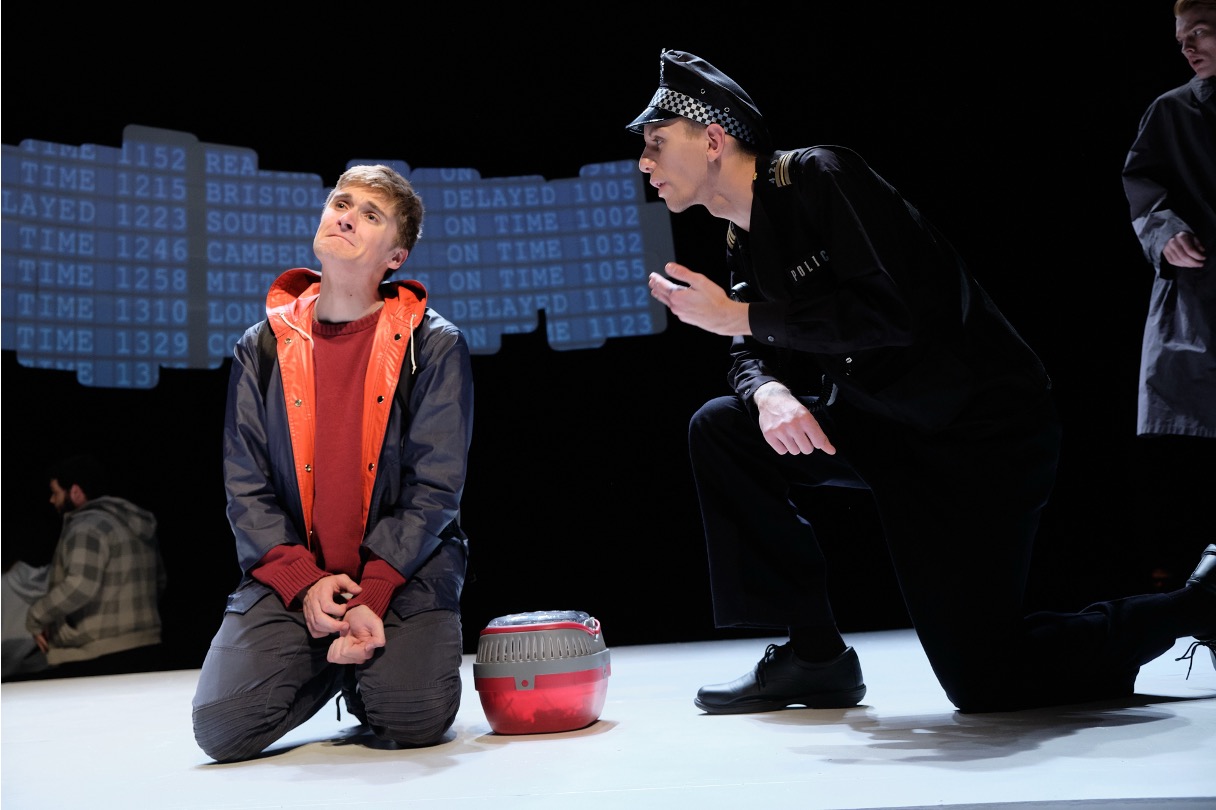
The choices you make will become your design conventions, the rules you set for yourself to guide your design. In the photo below, a production I directed of The Curious Incident of the Dog in the Nighttime, I wanted the world to feel sterile, minimalistic, clean, clearcut. From a design point this meant costumes that that spoke obviously, this meant a scenic design that was sparse and purely white, it meant projections that were graphic and hard edged in nature, and a lighting design that rested on purely white light. However, whenever the actors entered a place of memory, we would bring in color in order to separate this moment from the rest of the world. The text didn’t make that distinction clear, so we decided that the lighting should. Following this convention of color helped the audience understand the story and quickly follow along.
Conclusion
These tasks for a lighting designer are likely quite obvious when stated aloud, so you probably don’t need to write them down on a notecard and paste it to your light board. Perhaps you instead want to stitch them on a pillow and keep that pillow on your couch, that could be nice. Either way, these functions should live in your bones. They should be deeply ingrained in you so that they move your muscles. Hopefully speaking through them a bit helps you define those movements and tone those muscles.
I’ll also add that there are different functions of a lighting designer you could list here. Some that are regular, some that are unique to your situation. For example, safe illumination of the house before, after, and during a show is also your job – it’s just not an artistic one. Lighting the music stands for an orchestra, that’s you. Backstage blue lights for the actors, also your thing. Point is, let these functions inspire you, not confine you; let them help you craft a vision, not weigh you down with expectation.